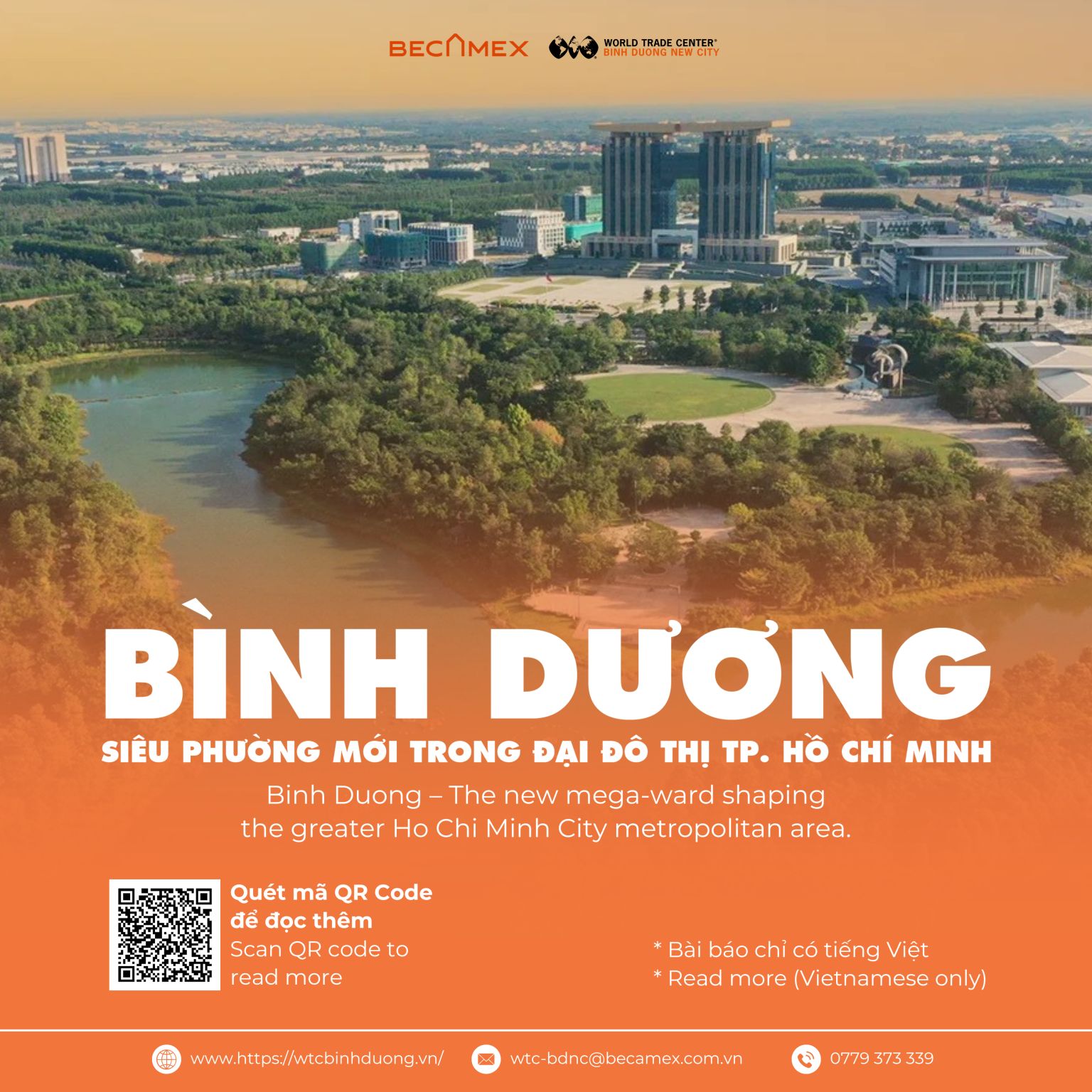
BINH DUONG – A PIONEERING “SUPER WARD” IN THE NEW METROPOLITAN HO CHI MINH CITY!
As of July 1, 2025, Binh Duong has officially become part of the expanded Ho Chi Minh City, marking a historic milestone that goes beyond mere administrative changes. This transition reflects a bold strategic vision to develop a smart, innovative, and sustainable metropolitan region, positioning Binh Duong as a model for future urban transformation in southern Vietnam.
One day prior to this integration, the local government of Binh Duong Ward hosted an official ceremony to announce the Resolutions of the Provincial Party Committee and the People’s Council regarding administrative reorganization. At the same event, the ward launched its official digital portal, a critical step toward building a digital government model. This platform is designed to enhance transparency, improve public services, and strengthen the connection between local citizens, businesses, and public authorities.
👉 Visit the Binh Duong Ward e-Portal: https://lnkd.in/gpHEjVTb
Strategically located within the Southern Key Economic Region, Binh Duong boasts outstanding growth potential and innovation capacity. Over the past decade, the area has been known for rapid industrialization, infrastructure development, and its commitment to smart city initiatives. Now, as a “super ward” within the greater Ho Chi Minh City metropolitan area, Binh Duong is expected to play a crucial role in shaping the region’s economic landscape, urban planning, and technological advancement.
A central highlight in Binh Duong’s new chapter is the WTC Binh Duong New City – a pioneering trade promotion hub that supports the local and international business community. This center facilitates global connectivity, attracts foreign investment, and fosters innovation across industries. Its presence further cements Binh Duong’s reputation as a leader in trade, innovation, and urban development within Vietnam.
The integration of Binh Duong into Ho Chi Minh City is also seen as a catalyst for balanced regional development. It aims to reduce pressure on the urban core of Ho Chi Minh City by promoting satellite urban areas that are well-equipped with modern infrastructure, public services, and green spaces. This aligns with Vietnam’s broader vision of building sustainable cities that prioritize environmental responsibility, digital transformation, and improved quality of life for residents.
For residents, this transformation promises upgraded public services, improved transportation links, enhanced healthcare and education systems, and more opportunities for employment and entrepreneurship. For businesses, it means better access to international markets, stronger logistics networks, and a dynamic ecosystem for innovation and collaboration.
In short, Binh Duong’s elevation to a “super ward” status is more than just a change on the map. It is a declaration of ambition and progress, setting a benchmark for urban development not only in Vietnam but across Southeast Asia. As Binh Duong steps confidently into this new role, it exemplifies how localities can harness administrative reform, digital governance, and global partnerships to drive sustainable growth and prosperity.